She traded construction sites for code reviews — and now helps make apps accessible for everyone
7 min. read - May 21, 2026
Get our newsletter in your inbox.

The designer‑turned‑engineer who boomeranged back to ArcTouch for a second stint of crafting lovable experiences

With a scent‑maker’s attention to detail and a pilot’s precision, he helps ArcTouch teams build lovable products with clarity
We help companies of all sizes build lovable apps, websites, and connected experiences.
[Editor’s note: This is part of a series of articles about app makers, highlighting talented team members who embody the builder mindset at ArcTouch, and how they find creative new ways to apply the latest technology to our projects.]
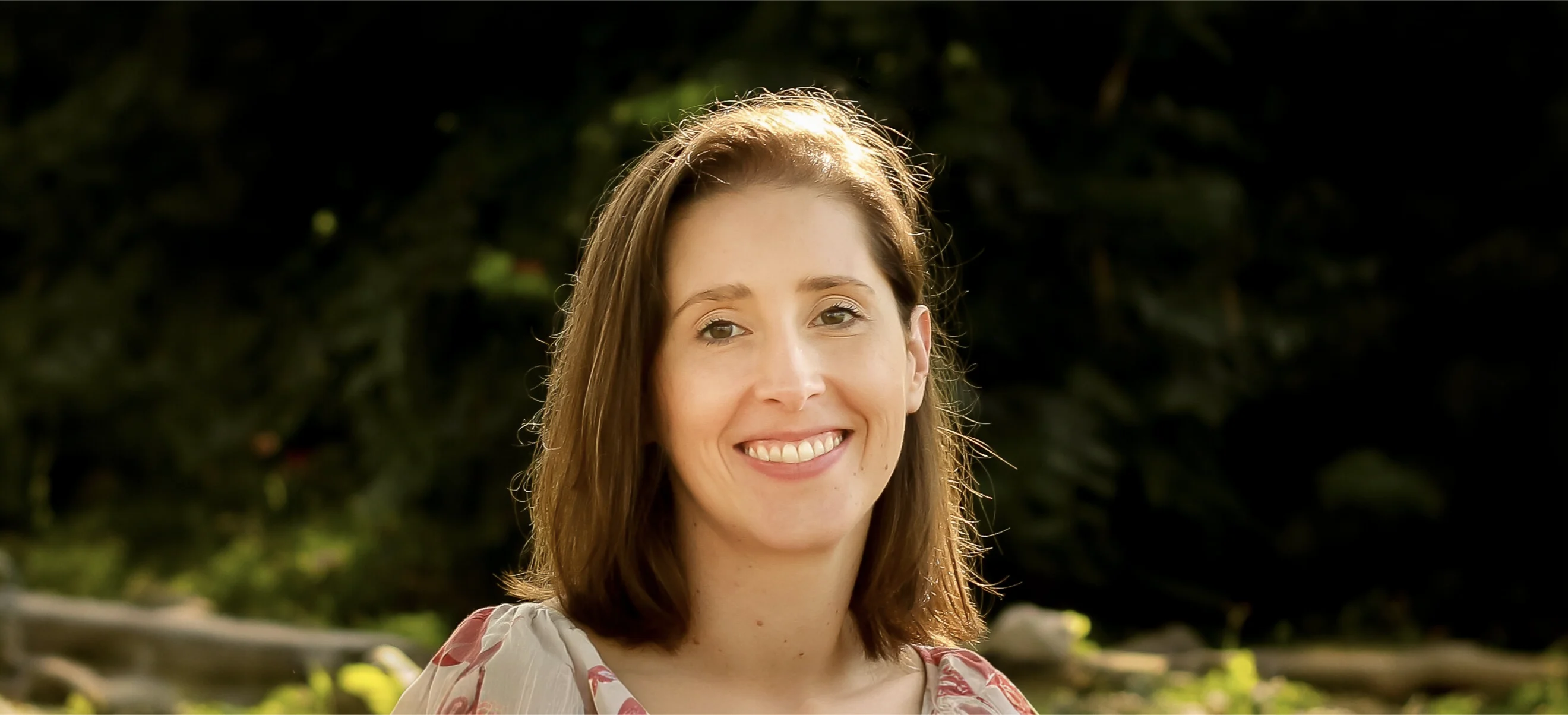
Before she ever tested an app, Alice Pieri was restoring old buildings.
As an architect specializing in historic preservation, she spent her days on construction sites and in client meetings, balancing art, history, math, and physics. She loved the craft. But when her first child was born, the long hours and constant travel didn’t leave space for the kind of parent she wanted to be.
During her maternity leave, her husband and brother — both in tech — encouraged her to consider a different path. They compared notes on work‑life balance, looked at her skills, and realized quality assurance (QA) might be a great fit. She started studying and “just loved it.”
Today, Alice is a QA analyst and accessibility champion at ArcTouch, working on a range of client projects. She brings an architect’s eye for detail, a mother’s empathy, and a CrossFit enthusiast's mindset to everything she does — especially accessibility.
We sat down with Alice to talk about her career transition, how her attention to detail and prior experiences show up in her work, and what it really takes to build accessible, lovable apps.
Honestly, as a QA analyst, I’m super picky, and I find issues in almost every app I use. So it’s hard to have a “perfect” favorite.
But one I use a lot and like is the Netflix app. I love watching documentaries, movies, and series — usually when I’m traveling — and I use it on my phone all the time. It does what I need it to do: make it easy to find something I want to watch and relax, even if it has its own issues.
I’d be back in architecture for sure. That’s still a big part of me, and I do love it.
I’ve always been passionate about art and history, but I also loved math and physics. Architecture was the perfect blend: I could stay close to the art and history side while still working with technical challenges.
Specializing in the restoration of older buildings combined all of that. Working on construction sites and with clients taught me a lot about details, constraints, and collaboration.
My Alexa. It helps me keep things organized — reminders, timers, day‑to‑day tasks. With kids, work, and everything else, having that little voice helping me remember things is a big deal.
Exercise has always been a huge part of my life. As a kid, I loved team sports — I used to play volleyball. When I got older and tried a traditional gym, I found it boring.
When I found CrossFit, I loved it. It’s dynamic, always pushing me to try harder, learn new movements, and lift more weight. Even though it’s technically an individual workout, there’s a strong community feel. You have your crew, everyone cheering you on. It brings back that team feeling I miss from volleyball.
Work‑wise, it shows up a lot. I’m a huge team player. I bring that team‑first mindset — encouraging others, cheering when someone learns something new or does a great job. I celebrate wins and support people when things are hard.
Being a mom puts everything into a new light. It made me much better at prioritizing and organizing myself. Before the kids, it was just my husband and me. I could work whenever I wanted. With two kids, I have to be more intentional with my time and energy.
My kids are my number one priority. I really value the time I have with them. So I make a point not to “take work home” — even though I work from home. Once I leave my office, I try to focus 100% on them. And once I’m in my office, I focus 100% on my job. That boundary helps me show up better in both roles.
I tell them I help make apps that are super useful and lovable for everybody — and that I’m the one who makes sure everything works the way it’s supposed to. My job is to find problems before users do, so their experience feels smooth and easy.
For me, lovable is something that makes me happy and makes me smile — a genuinely good thing in my day. The most lovable thing that happens every day is because I work from home: My office is upstairs, and my kids randomly pop in, give me a kiss and a huge hug, and then run off again. It’s simple, but it means everything.
The decision happened during my maternity leave. The year before I had my first child, I was working a lot — crazy hours, traveling all over to visit clients and construction sites, constantly stressed. During leave, I started asking myself if that was really the lifestyle I wanted.
My husband and brother work in tech. We started talking about how the tech industry approaches work‑life balance differently from construction. I looked at my skills and realized they could fit well in QA. I started studying, got deeper into it… and I just loved it. It felt like the same mindset of catching issues before the building is finished — just applied to software.
Architecture gave me a very sharp eye for details. In restoration, small mistakes can have big consequences. That translates directly into QA: spotting small issues early so they don’t become big problems later.
It also taught me how to work with lots of different stakeholders. On a construction site, you have clients, contractors, engineers, inspectors — everyone with their own priorities. There’s a lot of chaos. I’m used to that, so I don’t get stressed easily with day‑to‑day project issues. It helps me stay calm and focused when things get complicated.
People often think of QA as something that only happens at the end: you build everything, then QA comes in to test. But our mindset is active from the very beginning. We’re always thinking, “How will this be tested? What could go wrong? What’s missing?”
If QA is involved early, we can spot missing elements, edge cases, and potential issues during the design or requirements phase. That means we can fix things before they turn into rework, which saves our clients time and money.
For example, I was recently reviewing designs with an accessibility lens and spotted several things that could go wrong. We discussed them with designers, they adjusted the designs, and got approval from the client. By the time it reached development, those issues were already fixed. If we had waited until after implementation, those changes would have been much harder and more expensive.
Early QA involvement isn’t just about quality — it’s about efficiency.
One big moment for me was joining user testing sessions with people with disabilities.
Seeing someone try and fail to use a product was very eye‑opening. It’s one thing to talk about accessibility in theory; it’s another to watch a real person struggle with something that should be helping them.
I have a cousin with cerebral palsy. Before tech, I saw his challenges mostly in the physical world — stairs, buildings, physical barriers. Once I started working in tech, I saw him sending messages in family group chats and started wondering: how is he doing that? Is it easy for him, or is it hard? That changed how I looked at digital products.
I try not to assume they don’t care. I prefer to believe they don’t fully understand it yet.
A lot of resistance comes from not seeing the value, or seeing accessibility as a “nice to have” with extra cost. I see myself, and our team, as educators. We explain why it matters, what the impact is on real users, and how it connects to their business.
It’s great when we can change minds and see a client start to care, ask questions, and prioritize accessibility. And it’s wonderful when a client already has an accessibility-first mindset for apps and embraces it from the beginning — but that’s still rare. Most of the time, accessibility is seen as a plus. It shouldn’t be. It should be part of the default.
Two big ones show up a lot.
First: that accessibility is just about color contrast. Clients sometimes think, “We have good contrast, so we’re done.” But accessibility covers so much more — different types of disabilities, different interaction modes, different contexts.
Second: that compliance is the same as accessibility. People believe that checking all the WCAG boxes and think if they’re compliant, the app is fully accessible. That’s not true. You can check every box and still have an experience that’s confusing or frustrating for real users.
Compliance is a starting point, not the finish line.
Honestly, I’m proud of everything: the way it was built, the effort the whole team put in, and seeing the final report come together.
If I have to choose, I’m especially proud of the methodology we developed and the comprehensive spreadsheets we created to test and track everything. It was a lot of work, but it gave us a solid, repeatable process to evaluate apps and talk about accessibility with real data.
See how 50 leading Android and iOS apps across five industries performed when evaluated for digital accessibility.
Completely. Now, with every app and website I use, I notice accessibility issues. I see where there’s poor color contrast. I notice when elements aren’t reachable or labeled correctly. Sometimes I’ll grab an app and turn on the screen reader just to test it and see how it behaves, even though I don’t personally rely on those tools.
Unfortunately, most apps and websites still have a lot of accessibility problems. It makes me a bit sad — but it also motivates me to work harder to make things better for our clients and their users.
I really hope product leaders stop seeing digital accessibility as a “nice to have” or an extra cost.
I want accessibility to be seen as part of the default definition of building an app. If you’re building a lovable app, that means it works for everyone, including people with disabilities. Not “we’ll make it accessible if there’s budget left.”
When accessibility becomes a natural, expected part of product development instead of an optional add‑on, we’ll know we’re on the right path.
To always lead with empathy.
At work, I always try to understand where the other person is coming from — colleagues, clients, users. It makes collaboration and problem‑solving easier and helps build stronger connections. For accessibility, empathy is everything. You can’t design for people you aren’t really trying to understand.


